
Fire Barriers Sheffield
You need fire barriers installed or repaired in Sheffield, certified and documented by FIRAS-certified specialists across commercial and residential stock.
Whether you’re closing out a survey finding, an EWS1 flag, or specifying for a new build, we get it done without disrupting your building.
- Fast Turnaround: Efficient PFP Delivery
We deliver surveys and installations quickly and efficiently, keeping your project on schedule without compromising safety.
- Trusted Specialists: FIRAS Certified
Our accredited team brings proven expertise in passive fire protection, giving you complete confidence in compliance.
- Safety First
Every solution is designed to protect lives and property, ensuring long-term security and peace of mind.
What Happens When Fire Barriers Fail or Go Missing
Gaps in fire barriers let fire and smoke bypass compartmentation. Nothing looks wrong from a corridor or stairwell. You only find out when a fire reaches the void, and by then, there’s nothing to retrofit.
Cladding retrofits and refurbishment work on Sheffield’s older commercial and residential buildings often disturb previously compliant barriers. Under the Regulatory Reform (Fire Safety) Order 2005, that gap in protection is the responsible person’s problem until it’s resolved.
Fire Barriers and Cavity Barriers: What We Install
Cavity barriers close the gaps that let fire and smoke travel through hidden voids: behind cladding, above ceilings, under floors.
Small cavity barriers sit horizontally and vertically between the façade and internal substrate, typically stone wool slabs or preformed strips, filling the gap that façade construction leaves open.
Large cavity barriers span underfloor voids and roof areas, extending fire resistance above ceiling level to match the compartment wall they protect, usually where non-compliance turns up on older buildings.
Open-state cavity barriers sit in ventilated cladding and rainscreen systems, open for airflow, closing automatically on heat.
We cover remediation, refurbishment, and new-build installations, working directly with manufacturers and fire engineers on specification.
How Installation Works on an Occupied Building
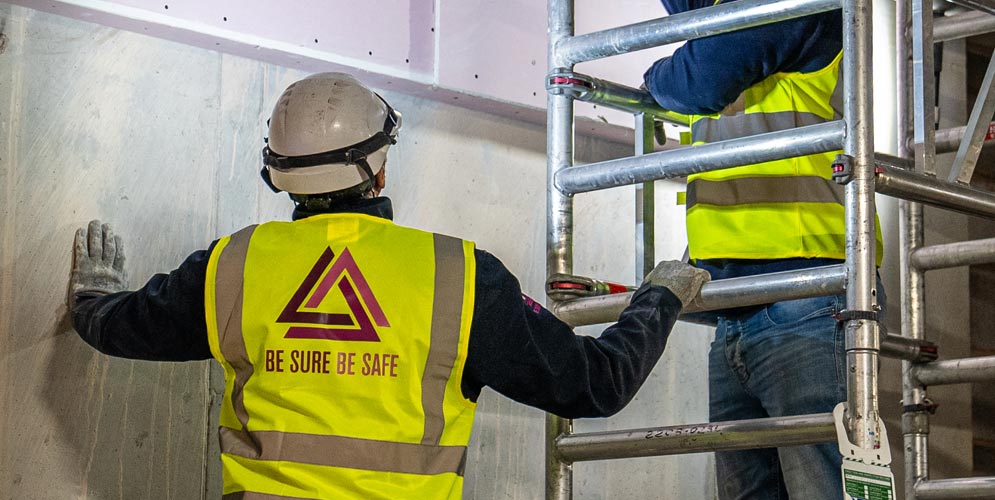
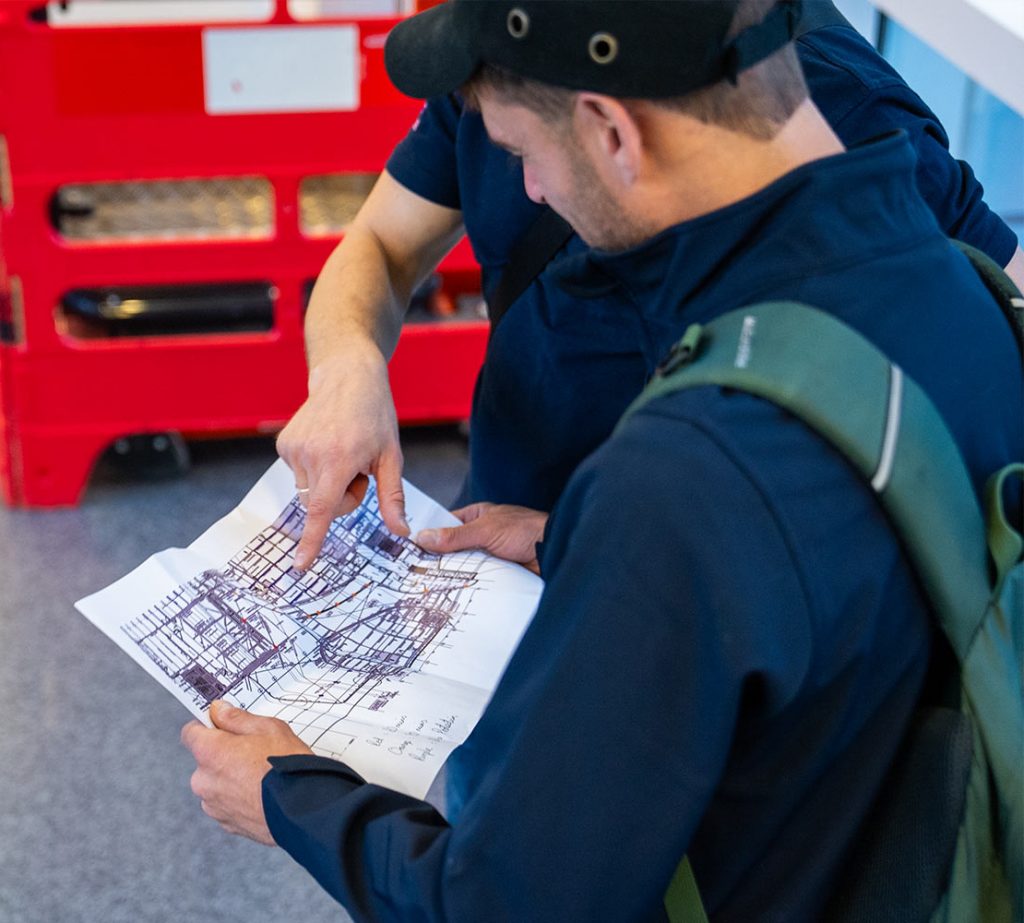
We survey against British Standards first, confirming exactly which barriers are missing or non-compliant. Access is then scheduled around your building’s occupied use, not the other way round.
The installation itself follows the manufacturer’s procedure, barrier by barrier. On completion, you get a certificate of compliance: the document you hand over to close the finding.
Why Sheffield Responsible Persons Choose Us
Every one of our surveyors and installers holds individual FIRAS certification (UKAS-accredited), not just the company-level accreditation you’ll see on our accreditations page. That matters when you’re the one signing off on compliance.











Fire Barrier Questions Answered
Got questions? We’ve put together some of the most common ones below to help you find the answers quickly and easily.
What Are Cavity Barriers?
Cavity barriers stop fire and smoke spreading through hidden voids in a building: behind cladding, above suspended ceilings, in roof spaces, and under floors. They sit wherever a wall or floor's fire resistance would otherwise stop at the cavity's edge.
What Is the British Standard for Cavity Barriers?
Cavity barriers sit under Approved Document B, with BS 9991 covering residential buildings and BS 9999 covering non-domestic ones. Both require a minimum of 30 minutes' integrity and 15 minutes' insulation, with the exact specification confirmed during the survey.
When Can Cavity Barriers Be Installed?
During construction on new builds, or on occupied buildings as part of remediation. We plan access around your building's use.
What Is a 60-Minute Fire Barrier?
Barriers are rated by resistance time, commonly 30 to 120 minutes. The surveyor specifies the right rating during the survey, matched to the compartment wall or floor it protects.
Will We Need to Close the Building or Move Out?
No. Installation is planned around your building's occupied use, whether that's a working office, a residential block, or a site with restricted access windows.
Areas We Cover
We cover the whole of the Sheffield and South Yorkshire area, including the Heart of the City developments, and we’re regularly on site across the Don Valley and Attercliffe industrial belt along the M1 Junction 34 corridor near Meadowhall. We’re based on Shepcote Lane in Tinsley, so Darnall, Hillsborough, and the wider S1 to S10 postcodes are easy reach.
Get Your Fire Barriers Surveyed and Certified
Contact Information
- Telephone: 0800 781 2652
- Email: info@bluechippfp.co.uk
- Address: Unit 5 Shepcote Office Village Shepcote Lane, Sheffield, S9 1TG
Business Hours
Monday – Friday
9:00am – 5:00pm